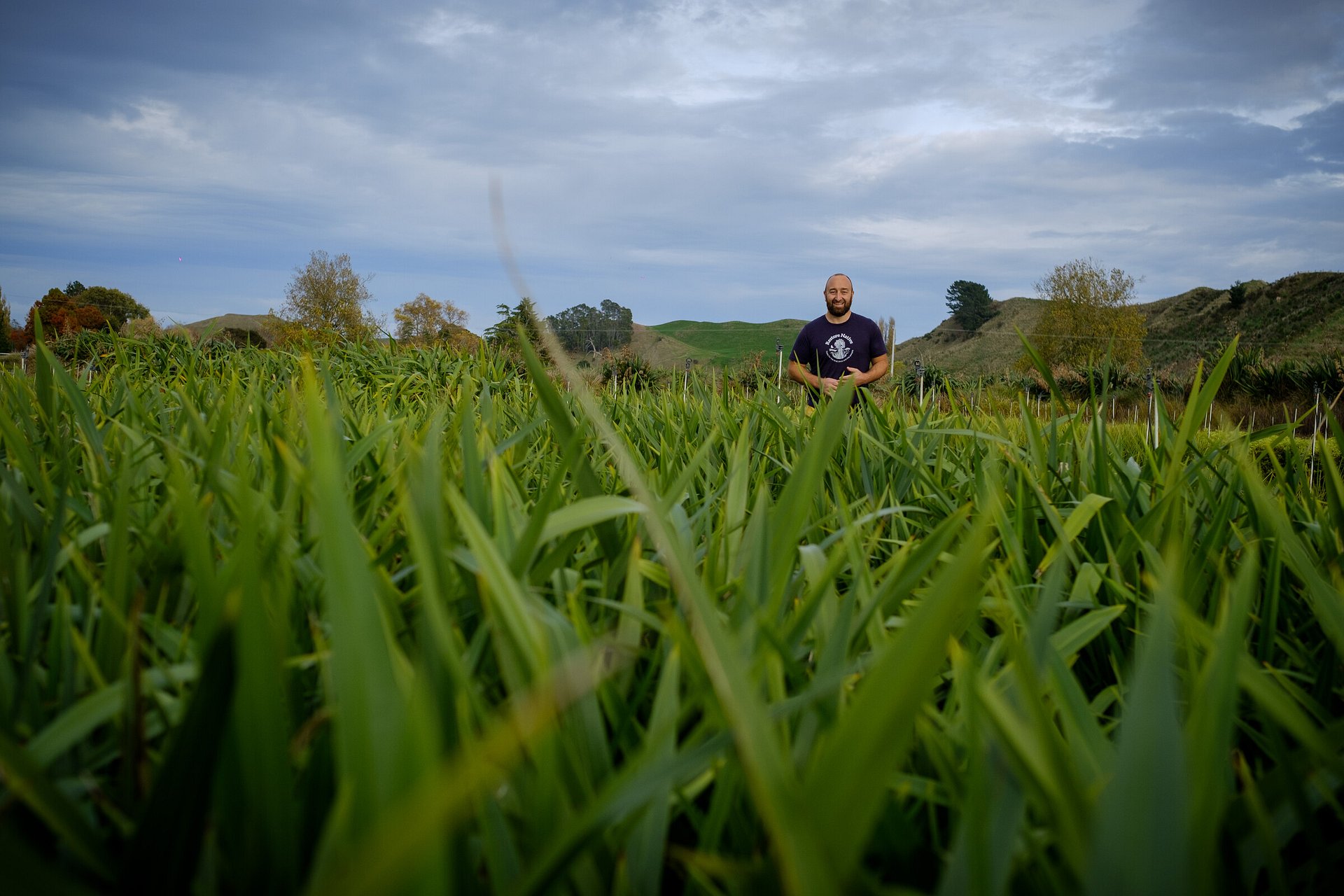
When people think of riparian planting, swamp flax is often one of the first plants that comes to mind.
While flax certainly has a place within native planting projects, it's not always the best option right alongside waterways.
If you're planting stream edges, drains, wetlands, or riparian margins, Carex species are often the real MVPs.
Why Carex Outperforms Flax Along Waterways
One of the biggest challenges around waterways is dealing with flooding, erosion, and sediment movement.
Large flax plants can become problematic over time. As they mature, they can split, topple, become undermined during flood events, and in some cases contribute to blocked drains and water flow issues.
Carex grasses behave very differently.
When floodwater rises, Carex plants simply fold over and allow water to pass through them. Rather than creating resistance, they move with the flow, reducing the risk of bank damage and washouts.
Excellent Bank Stabilisation
Species such as Carex virgata develop dense root systems that help bind soil together and stabilise stream banks.
These fibrous roots are highly effective at reducing erosion and protecting waterways from sediment entering the water.
Keeping soil where it belongs is one of the most important functions of a well-designed riparian planting.
Natural Nutrient Filters
Carex species also play an important role in intercepting nutrients and sediment before they enter waterways.
By slowing overland flow from paddocks and surrounding land, they help capture contaminants that would otherwise end up in streams and rivers.
This improves water quality while supporting healthier aquatic ecosystems.
Creating Habitat for Wildlife
The benefits don't stop at erosion control.
As Carex grows, it begins to overhang waterways, creating shade that helps keep water temperatures cooler.
Cooler water supports healthier aquatic environments and improved biodiversity.
Carex also provides habitat for invertebrates, which form an important food source for native fish, eels, and other aquatic species.
Choosing the Right Carex
Not all Carex species perform the same role.
Some of the most commonly used species in riparian projects include:
Carex virgata – excellent for stream margins and bank stabilisation.
Carex secta – ideal for wetter areas and low-lying margins.
Carex geminata – performs exceptionally well right on the water's edge.
Selecting the right species depends on site conditions, moisture levels, and planting objectives.
Where Does Flax Fit?
We're not saying don't plant flax.
Flax still plays an important role within riparian designs.
The key is positioning it correctly.
As you move further away from the immediate stream edge, species such as:
Swamp flax
Toetoe
Cabbage trees
Ribbonwood
Kahikatea
Pukatea
all become valuable components of a diverse riparian planting.
The Takeaway
Good riparian planting isn't about choosing a single species.
It's about putting the right plant in the right place.
If you're planting directly alongside a waterway, Carex should be one of the first species you consider. Its ability to stabilise banks, reduce erosion, filter nutrients, improve biodiversity, and withstand flood events makes it one of the most effective native plants available for riparian restoration.
Need help designing a riparian planting project?
The Restore Native team can help assess your site, recommend suitable species, and develop a planting plan that delivers long-term environmental outcomes.